
Manual Therapy Myths: What Really Works and Why

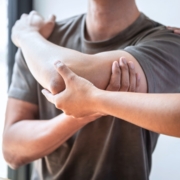
If you have ever been to physical therapy or sports rehab, you have probably heard the term “manual therapy.” From massage and joint mobilization to soft tissue work and stretching, manual therapy is one of the most talked-about treatment approaches in rehabilitation. But there are also plenty of misconceptions surrounding it.

At Wall 2 Wall Sports & Rehab we believe patients deserve honest, evidence-based care. Let’s break down some of the most common manual therapy myths and explain what actually works when it comes to reducing pain, improving movement, and helping you return to the activities you love.

Myth #1: Manual Therapy “Fixes” the Problem Instantly

Many people believe that a massage, adjustment, or soft tissue treatment permanently “puts things back into place.” In reality, the human body is much more complex than that.

Manual therapy can absolutely help reduce pain, improve mobility, and calm irritated tissues. However, lasting recovery usually requires a combination of treatments that include strengthening, mobility exercises, movement retraining, and activity modification.

At Wall 2 Wall Sports & Rehab, manual therapy is used as part of a comprehensive treatment plan—not as a temporary quick fix. Whether you are dealing with shoulder pain, back pain, golf injuries, or post-surgical stiffness, the goal is long-term improvement and performance.

Myth #2: If It Hurts More, It Works Better

This is one of the biggest misconceptions in sports rehabilitation. Aggressive treatment does not always mean better treatment.

Some patients think deep pressure or painful techniques are necessary to “break up scar tissue” or create results. Research continues to show that excessively painful treatment can actually increase muscle guarding and nervous system sensitivity.

Effective manual therapy should feel productive, not traumatic. Skilled physical therapists know how to adjust pressure and techniques based on your condition, pain level, and goals.

At our mobile physical therapy clinic in Glendale and the West Phoenix area, treatments are individualized. Some athletes benefit from deeper soft tissue mobilization, while others respond better to gentle joint mobilizations, cupping, or mobility work.

Myth #3: Manual Therapy Only Works for Athletes

Manual therapy is not just for high-level athletes or active adults. It can benefit almost anyone experiencing pain, stiffness, or movement limitations.

We commonly use manual therapy for:

  • Neck and back pain
  • Shoulder injuries
  • Hip and knee stiffness
  • Sports injuries
  • Pickleball and golf-related pain
  • Post-surgical recovery
  • Chronic muscle tightness
  • Headaches and mobility restrictions

Combined with corrective exercise and movement education, manual therapy can help patients of all ages move more comfortably and confidently.

Myth #4: Massage and Manual Therapy Are the Same Thing

Massage can certainly be helpful for relaxation and circulation, but physical therapy manual therapy is much more targeted.

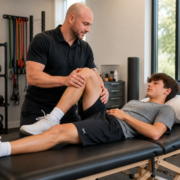
A Doctor of Physical Therapy uses hands-on techniques based on anatomy, biomechanics, and movement assessments. This may include:

At Wall 2 Wall Sports & Rehab, treatments are designed to improve function—not just provide temporary relief.

What Really Works?

The most effective rehabilitation plans combine:

  • Hands-on manual therapy
  • Strength training
  • Mobility exercises
  • Activity-specific rehab
  • Patient education
  • Progressive loading strategies

Manual therapy works best when it helps patients move better, tolerate exercise more comfortably, and regain confidence in their body.

If you are searching for mobile physical therapy in Glendale AZ, sports injury rehab in Peoria, or concierge physical therapy in West Phoenix, Wall 2 Wall Sports & Rehab provides one-on-one personalized care designed around your goals and lifestyle.

Ready to get back to doing what you love without pain limiting your progress? Contact Wall 2 Wall Sports & Rehab today to schedule your in-home evaluation.

Rest vs. Rehab: Why Complete Rest Isn’t Always the Best Recovery Plan

When pain or injury strikes, the first instinct for many people is simple: stop moving and rest. While rest can be helpful in the early stages of an injury, complete inactivity for too long can actually slow recovery and make returning to normal activities harder. Understanding the difference between helpful rest and guided rehabilitation can make a major difference in how quickly and safely you heal.

At Wall 2 Wall Sports & Rehab, we often meet patients who have been resting for weeks or months, hoping their pain will disappear. Instead, they feel stiff, weak, and frustrated. The truth is that the body heals best when rest and movement are balanced correctly.

Why Rest Is Important in Early Recovery

Rest plays a valuable role immediately after an injury. When tissues are irritated or damaged, the body needs time to calm inflammation and begin the healing process. This early phase may involve reducing activity, modifying workouts, or avoiding movements that cause sharp pain.

However, rest should be temporary and strategic. The goal is to protect the injured area while preparing it to move again safely. Staying completely inactive for too long can create new problems that delay healing.

What Happens When You Rest Too Long

Many people are surprised to learn how quickly the body begins to lose strength and mobility during inactivity. Research shows that muscle strength can begin to decline within just one to two weeks of reduced use. Joints can become stiff, balance can decrease, and overall endurance drops.

Extended rest can lead to:

  • Muscle weakness and loss of stability
  • Joint stiffness and reduced flexibility
  • Decreased circulation and slower healing
  • Increased risk of reinjury when activity resumes
  • Ongoing pain caused by poor movement patterns

This is why pain often returns when someone tries to get back into exercise or daily activities after a long period of rest.

The Difference Between Rest and Rehabilitation

Rest means reducing stress on the body. Rehabilitation means guiding the body back to normal movement safely and progressively. Both are important, but they serve different purposes.

Rehabilitation focuses on restoring strength, flexibility, coordination, and confidence. Instead of avoiding movement, rehab introduces the right movements at the right time and intensity.

This approach allows injured tissues to adapt and become stronger as they heal.

Why Movement Helps the Healing Process

Gentle, guided movement improves blood flow, which delivers oxygen and nutrients to healing tissues. Movement also helps maintain joint mobility and keeps surrounding muscles active and supportive.

Without movement, scar tissue can form in a way that limits flexibility and function. With the right exercises, tissues heal in a more organized and resilient way.

This is one of the main reasons physical therapy plays such a key role in recovery. A structured program ensures that activity progresses safely without aggravating the injury.

Common Injuries That Benefit from Early Rehab

Many conditions respond better to controlled movement than complete rest, including:

In these cases, avoiding movement for too long often leads to stiffness and delayed recovery.

How a Doctor of Physical Therapy Guides Recovery

A Doctor of Physical Therapy evaluates how your body moves, identifies limitations, and creates a personalized plan to help you recover. This plan typically includes:

Movement assessment: Understanding which motions are limited or painful.
Hands-on treatment: Techniques to improve joint and soft tissue mobility.
Targeted exercises: Strengthening and stability work tailored to your needs.
Education: Guidance on activity levels, posture, and daily habits that support healing.

This combination helps patients move forward with confidence instead of guessing what is safe.

The Benefits of Mobile, Concierge Physical Therapy

One challenge many people face is finding time to prioritize recovery. Busy schedules, long commutes, and crowded clinics can make consistent care difficult.

Mobile physical therapy removes these barriers by bringing treatment directly to your home, workplace, or gym. Longer, one-on-one sessions allow for a more thorough evaluation and a personalized recovery plan that fits your lifestyle.

This approach helps patients stay consistent, which is one of the most important factors in successful rehabilitation.

Knowing When to Seek Help

A good rule of thumb is to seek guidance if pain lasts longer than a few days, returns repeatedly, or limits daily activities. Waiting too long can allow small issues to become more complex and harder to treat.

Early intervention often leads to faster recovery, fewer setbacks, and better long-term results.

Finding the Right Balance Between Rest and Rehab

The key takeaway is simple: rest is helpful, but movement is essential. The body is designed to move, adapt, and become stronger through activity. When rest and rehabilitation are balanced correctly, recovery becomes more efficient and sustainable.

If pain or injury is keeping you from doing what you love, you do not have to wait for it to resolve on its own. Guided rehabilitation can help you move better, feel stronger, and return to your normal routine with confidence.

Taking the first step toward recovery can be as simple as reaching out for professional guidance and creating a plan tailored to your needs. Call to schedule your appointment today with Wall 2 Wall Sports & Rehab.

Spring Clean Your Movement: Injury Prevention Tips for Active Adults

Spring is one of the best times of year in the West Valley. The weather is perfect. The trails are calling. Pickleball courts are packed. Golf tee times fill up fast.

But every March, we see the same pattern. Activity levels jump quickly… and so do injuries.  March is an ideal time to spring clean your movement and focus on injury prevention.   

At Wall 2 Wall Sports & Rehab, we help active adults across Glendale, Peoria, Surprise, Goodyear, and North Phoenix stay ahead of pain before it slows them down. If you enjoy pickleball, hiking, running, or golf, this is your reminder to “spring clean” your movement.

Why Spring Injuries Happen

Most spring injuries are not traumatic. They’re overload injuries.

You go from:

  • Short winter walks → long hikes at White Tank or Thunderbird
  • Casual rallies → competitive pickleball tournaments
  • Range sessions → 36 holes in a weekend
  • Treadmill miles → outdoor pavement miles

Your tissues simply aren’t ready for the sudden spike in volume.

Common issues we treat include:

The good news? Most are preventable. 

  1. Reset Your Baseline Mobility

Think of this as your movement “deep clean.”

Before increasing intensity, ask:

  • Do your hips rotate well?
  • Can your ankle dorsiflexion support running or hiking?
  • Does your thoracic spine rotate for a full golf swing?
  • Is your shoulder stable during overhead pickleball shots?

Limited mobility leads to compensation. Compensation leads to overload.

An in-home movement screen with our team can identify restrictions before they become injuries. Our 90-minute evaluation includes hands-on treatment and corrective exercise planning so you’re not guessing. 

  1. Upgrade Your Shoes (They Matter More Than You Think)

Worn-out or sport-inappropriate shoes are one of the biggest contributors to spring injuries.

Runners:
Replace shoes every 300–500 miles. Look for proper arch support and avoid excessive heel breakdown.

Pickleball players:
Court shoes are essential. Running shoes lack lateral stability and increase ankle injury risk.

Hikers:
Trail-specific footwear with proper grip reduces slipping and overuse stress.

Golfers:
Stable, supportive golf shoes improve ground reaction force and reduce stress on knees and low back.

If you’re dealing with chronic foot or ankle pain, we  can assess foot mechanics and determine whether orthotics or footwear adjustments are appropriate.

     3.  Don’t Ignore Strength

Mobility without strength is instability.

Key spring injury prevention muscle groups:

  • Glute medius for lateral stability (pickleball and hiking)
  • Calf complex for runners and hikers
  • Rotator cuff and scapular stabilizers for overhead athletes
  • Core and hip rotators for golfers

At Wall 2 Wall Sports & Rehab we build strength programs specific to your sport and lifestyle. No generic handouts. No rushed 20-minute sessions.

     4. Use Smart Recovery Tools

Recovery is part of performance.

Helpful tools include:

  • Compression boots for circulation
  • Soft tissue mobilization and cupping
  • Dry Needling Glendale AZ for tendon irritation
  • Diagnostic Ultrasound for Injuries Glendale AZ to confirm tissue involvement

Early intervention prevents minor irritation from becoming a 6–8 week shutdown.

      5. Progress Gradually

The 10% rule is still gold:
Increase mileage, rounds, or play time by no more than 10% per week.

Consistency beats intensity.

Spring Forward Without Pain

You live in one of the most active communities in Arizona. The goal isn’t to slow down. It’s to move better.

At Wall 2 Wall Sports & Rehab, we deliver physical therapy directly to your home, gym, or office. As Doctors of Physical Therapy we help active adults return to hiking, pickleball, running, and golf faster — without insurance limitations.

This spring, don’t just clean your garage – Spring clean your movement.

Schedule your in-home evaluation today and stay ahead of injury before it sidelines your season.

Why Isn’t My Injury Healing? Getting a Real Diagnosis in the West Valley

If you’ve been sidelined by an injury for weeks or months, you know how frustrating the “waiting game” can be. You’ve tried rest, maybe some general exercises, or even a round of physical therapy in a busy clinic, but the pain is still there.

Often, the reason an injury won’t heal isn’t a lack of effort—it’s a misdiagnosis. At Wall 2 Wall Sports & Rehab, we believe that to fix the problem, we first have to find it. As a mobile, concierge physical therapy provider serving Glendale, Peoria, Litchfield Park, Surprise, Avondale, and Goodyear, we bring elite-level diagnostics directly to your door.

The Big Three: Joint, Nerve, or Muscle?

Pain is a great messenger but a poor navigator. It tells you that something is wrong, but it isn’t always clear about what is wrong. To get you back to the sports and activities you love, we perform a differential diagnosis to distinguish between the three big players:

  • Joint Pain: This usually feels deep and “achy.” It often hurts more when you put weight on it. If your knee feels stiff in the morning or your shoulder pinches when you reach overhead, the joint (or the cartilage and ligaments) is likely involved.
  • Nerve Pain: This is often described as “electric.” You might feel burning, tingling, or “pins and needles.” Nerve pain is tricky because the source might be in your neck or back, even if you feel the pain in your hand or foot.
  • Muscle Pain: This is usually a duller, broader ache that feels tender to the touch. If you have a true muscle strain, the pain usually flares up specifically when you try to use that muscle.

Why Standard Treatments Often Fail

Many West Valley patients come to us after “failing” traditional physical therapy. Often, they were treated for a muscle strain when they actually had a nerve entrapment, or they were told they had “arthritis” when the real issue was a chronic tendon tear.

Without a precise diagnosis, treatment is just guesswork. If you treat a nerve problem with heavy muscle stretching, you might actually make the inflammation worse. This is why our concierge approach is different: we take the time to look at the whole picture.

Seeing the Solution: On-Site Diagnostic Ultrasound

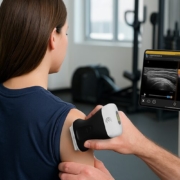
The biggest hurdle in traditional medicine is the “wait and see” approach or relying on an old MRI. Wall 2 Wall Sports & Rehab changes the game by providing Diagnostic Ultrasound imaging on-site during our mobile visits.

Unlike a static X-ray or MRI, diagnostic ultrasound allows us to see your tissues in real-time motion. We can watch how your tendon glides or see if a nerve is being compressed while you move. This immediate feedback allows us to:

  1. Confirm the exact source of your pain.
  2. Provide a targeted treatment protocol right there in your home or office.
  3. Track your healing progress over time.

Concierge Care in the West Valley

You don’t have to drive across town to sit in a waiting room. Whether you are a golfer in Litchfield Park, a cross-fitter in Peoria, or a busy parent in Goodyear, we bring high-tech rehab to you.

Stop wondering what is really hurting and start getting answers. Contact Wall 2 Wall Sports & Rehab today to schedule your appointment today. Let’s stop the guesswork and get you back to peak performance with a diagnosis you can trust.

A Resolution to Move: Your 2026 Full Body Reset Starts Here

Happy New Year, Phoenix! As we step into January 2026, the “New Year, New Me” energy is in full swing. Many of us are setting goals to get back in shape, run that 5K, or finally hit the gym consistently. But before you jump into a high-intensity workout plan, ask yourself: is your body actually ready for it?

At Wall 2 Wall Sports & Rehab, we believe the best resolution you can make this year is a resolution to move better. Instead of just pushing through the pain, 2026 is the year for a full body reset. Whether you are restarting rehab for an old injury or looking to prevent a new one, physical therapy is the secret weapon for a successful, healthy year.

Why Physical Therapy is the Ultimate “Reset”

Most people think physical therapy is only for after a major surgery. In reality, it is about movement optimization. Think of your body like a high-performance vehicle. If the alignment is off, it doesn’t matter how fast you drive; eventually, a tire is going to blow.

Our Doctors of Physical Therapy (DPTs) are experts in biomechanics. We don’t just look at where it hurts; we look at why it hurts. A “full body reset” involves:

  • Identifying Muscle Imbalances: Finding the “lazy” muscles that are making other parts of your body work too hard.
  • Improving Joint Mobility: Ensuring your ankles, hips, and spine move freely so you don’t strain your lower back.
  • Restoring Functional Strength: Building strength that actually carries over into your daily life and sports.

The Mobile Concierge Advantage

We know that life in the West Valley is busy. Between work, family, and enjoying the Arizona sun, finding time to drive to a crowded clinic and sit in a waiting room is a hassle. That is why Wall 2 Wall Sports & Rehab brings the clinic to you.

As a mobile, concierge physical therapy provider, our doctors travel directly to your home or office. We proudly serve the West Phoenix area, including:

  • Glendale
  • Peoria
  • Surprise
  • Goodyear

When you choose our concierge service, you aren’t just a number. You get one-on-one care with a Doctor of Physical Therapy for the entire session. There are no assistants or double-booked appointments—just expert care focused entirely on your “full body reset.”

Make PT Part of Your 2026 Strategy

If you have tried to “restart rehab” on your own in the past but quit because the pain came back, you aren’t alone. Most “DIY” rehab fails because it isn’t specific to your body’s unique movement patterns. By incorporating professional physical therapy into your New Year’s resolution, you are investing in a foundation that will keep you active all year long.

Stop ignoring those nagging aches in your knees or that stiffness in your neck. Let 2026 be the year you prioritize your physical health with a team that comes to you.

Start Your Reset Today!

Don’t let your New Year’s goals fizzle out by February due to an avoidable injury. Take the first step toward a stronger, pain-free version of yourself with our West Valley experts.

Are you ready for your Full Body Reset? Contact Wall 2 Wall Sports & Rehab today to schedule your mobile evaluation in Glendale, Peoria, Surprise, or Goodyear. Let’s get you moving again!