Dry Needling: How This Modern Physical Therapy Technique Can Speed Your Recovery

If you’ve been dealing with muscle pain, tightness, or an injury that just won’t go away, you’ve probably heard about dry needling. Many athletes, weekend warriors, golfers, runners, and active adults use this treatment to reduce pain and restore movement. However, many people still wonder what dry needling actually is and how it works.

At Wall 2 Wall Sports & Rehab, we use dry needling as one part of a comprehensive treatment plan to help patients recover faster, move better, and return to the activities they love. Rather than masking symptoms, our goal is to identify and treat the source of your pain.

What Is Dry Needling?

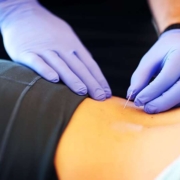
Dry needling is an advanced physical therapy technique that uses very thin, sterile, single-use filament needles to address pain, movement restrictions, muscle dysfunction, and impaired tissue mobility. Because the needles do not deliver medication or inject any substance into the body, the technique is referred to as “dry” needling.

In a physical therapy setting, dry needling is not limited to treating specific trigger points. Instead, a physical therapist uses a detailed understanding of anatomy, biomechanics, and movement patterns to determine which muscles, tendons, connective tissues, or neuromuscular structures may be contributing to pain or dysfunction. The goal is to influence the body’s neuromuscular system, improve tissue health, and restore more efficient movement.

By stimulating targeted tissues, dry needling can help reduce pain, improve circulation, decrease muscle guarding, enhance mobility, and promote a more normal movement pattern. As a result, patients often experience improved flexibility, better muscle performance, and faster recovery from injury. When combined with corrective exercise, manual therapy, and movement retraining, dry needling serves as a valuable tool within a comprehensive rehabilitation program designed to address the underlying cause of pain rather than simply managing symptoms.

How Is Dry Needling Different From Acupuncture?

Although both treatments use similar needles, they have very different goals.

Acupuncture comes from Traditional Chinese Medicine and focuses on balancing the body’s energy pathways, known as meridians.

Dry needling, on the other hand, is based on modern anatomy, neuroscience, and evidence-based physical therapy. Physical therapists use their knowledge of muscles, tendons, nerves, and movement patterns to target specific tissues contributing to pain or dysfunction.

Why Do Physical Therapists Recommend Dry Needling?

Many injuries create muscle tightness, protective muscle guarding, or trigger points that limit recovery. Even after the injured tissue begins healing, these muscle restrictions can continue causing pain and limiting movement.

Dry needling helps interrupt this cycle.

As a result, physical therapists commonly recommend dry needling for:

Additionally, athletes often choose dry needling to improve muscle recovery after intense training or competition.

What Are the Benefits of Dry Needling?

When performed by a trained physical therapist, dry needling offers several important benefits.

These include:

  • Reduces muscle pain
  • Decreases muscle tension
  • Improves flexibility and mobility
  • Restores normal muscle activation
  • Increases blood circulation
  • Improves joint movement
  • Speeds the healing process
  • Reduces protective muscle guarding
  • Enhances athletic performance
  • Helps prevent recurring injuries

Most importantly, dry needling works best when combined with corrective exercises, manual therapy, and movement retraining. Instead of providing only temporary relief, this comprehensive approach addresses the underlying cause of the problem.

What Does Dry Needling Feel Like?

Many patients feel very little when the needle enters the skin because the needles are much thinner than those used for injections or blood draws.

However, once the needle reaches a trigger point, you may experience a quick muscle twitch or brief cramping sensation. Although this feeling lasts only a few seconds, it often indicates the targeted muscle is responding appropriately.

After treatment, it’s common to feel mild soreness for 24 to 48 hours, similar to the soreness you might experience after a challenging workout. Fortunately, most patients notice improved movement and decreased pain shortly afterward.

Is Dry Needling Safe?

Yes. Dry needling is considered very safe when performed by a properly trained and licensed physical therapist using sterile, single-use needles.

Before treatment, your physical therapist performs a thorough examination to determine whether dry needling is appropriate for your condition. Certain medical conditions, medications, or patient preferences may make other treatment options more appropriate.

Patient safety always remains our highest priority.

Why Choose Wall 2 Wall Sports & Rehab?

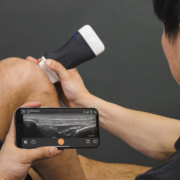
At Wall 2 Wall Sports & Rehab, dry needling is never used as a standalone treatment. Instead, we combine it with advanced orthopedic evaluation, hands-on manual therapy, corrective exercise, movement analysis, and, when appropriate, diagnostic musculoskeletal ultrasound imaging to identify the true source of your pain.

As a mobile concierge physical therapy practice serving Phoenix, Glendale, Peoria, Scottsdale, Surprise, Goodyear, and the surrounding West Valley, we bring expert care directly to your home, office, gym, or athletic facility. This one-on-one approach allows us to spend more time understanding your injury and developing a personalized treatment plan designed around your goals.

Whether you’re recovering from a sports injury, struggling with chronic muscle tightness, or looking to improve your performance, our team is committed to helping you recover safely and efficiently.

Ready to Move Better?

Pain doesn’t have to limit your lifestyle. If muscle tightness, recurring injuries, or persistent pain are keeping you from doing what you love, dry needling may be an effective part of your recovery.

Contact Wall 2 Wall Sports & Rehab today to schedule your comprehensive physical therapy evaluation and discover how dry needling can help you recover faster, move with confidence, and get back to living an active life.

How Your Golf Swing Is Telling You Something is Wrong – A TPI Perspective

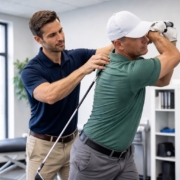
If your golf game has felt off lately — inconsistent ball striking, a recurring slice, or that nagging tightness after 9 holes — your body might be sending you a message. In fact, what shows up on the course is often a direct reflection of what’s happening inside your body. At Wall 2 Wall Sports & Rehab, our TPI-certified Doctor of Physical Therapy, Dr. Caleb Walls, helps golfers throughout Phoenix, Scottsdale, Glendale, Peoria, and Surprise decode exactly what their swing is really saying.

What Is TPI and Why Does It Matter?

First and foremost, it’s important to understand what TPI actually is. The Titleist Performance Institute (TPI) is the world’s leading educational organization dedicated to the study of how the human body functions in relation to the golf swing. As a result, TPI-certified practitioners like Dr. Walls are trained to identify the direct connection between physical limitations and swing faults — and more importantly, to fix them.

The core principle is simple: your body dictates your swing. No matter how technically perfect your coach’s instruction is, if your body can’t physically execute the movement, you’ll compensate. Those compensations show up as swing flaws. Those swing flaws, left unaddressed, often lead to injury.

Common Swing Faults That Signal a Physical Problem

Here are some of the most common swing characteristics that TPI screening links to underlying physical dysfunction:

Early Extension (Standing Up at Impact)
When a golfer thrusts their hips toward the ball during the downswing, it’s often a sign of limited hip mobility or poor core stability. This compensation pattern places excessive stress on the lower back and spine — one of the most common golf-related injuries we treat at Wall 2 Wall Sports & Rehab.

Reverse Spine Angle
Leaning the torso toward the target during the backswing is a red flag for restricted thoracic (mid-back) rotation or hip inflexibility. This pattern dramatically increases the load on lumbar discs and is a leading predictor of back pain in golfers.

Loss of Posture / C-Posture
 A rounded upper back at address or during the swing often reflects tightness in the chest, shoulders, and thoracic spine. Golfers with this pattern frequently experience shoulder and neck discomfort after a round.

Sway or Slide
 Finally, excessive lateral movement of the hips during the backswing or downswing typically indicates weak glutes, limited hip internal rotation, or poor balance and proprioception. This directly affects power generation and can stress the knee, hip, and ankle.

From the Fairway to the Treatment Table — Without the Commute

What makes Wall 2 Wall Sports & Rehab uniquely positioned to help golfers is our mobile physical therapy model. Dr. Walls brings expert-level, insurance-free, one-on-one care directly to you — at home, at your course, or wherever is most convenient across the Phoenix metropolitan area.

The TPI Screen: Your Golf Performance Health Check

A TPI movement screen evaluates 16 physical benchmarks that are directly correlated to the golf swing. In one session, Dr. Walls can identify mobility restrictions, strength imbalances, and stability deficits — then build a corrective program designed specifically for your body and your game.

Whether you’re dealing with golf elbow, hip impingement, a strained wrist, or chronic back tightness, the goal is always the same: restore full function, eliminate compensation patterns, and get you back on the course playing your best golf — pain free.

Don’t Blame Your Swing — Fix Your Body

Before you book another lesson, consider this: if your body can’t perform the motion your coach is asking for, no amount of instruction will fix the underlying issue. The swing fault isn’t the problem. It’s the symptom.

Wall 2 Wall Sports & Rehab is here to find and treat the root cause. Serving golfers across Phoenix, Scottsdale, Glendale, Peoria, and Surprise, Dr. Caleb Walls is ready to help you move better, swing better, and feel better.

Ready to schedule your TPI movement screen? Contact Wall 2 Wall Sports & Rehab today and take the first step toward playing the best golf of your life.

Pain-Free Pickleball: Stay in the Game

Pickleball is one of the fastest-growing sports—and it’s easy to see why. It’s fun, competitive, and accessible for all ages. But as participation increases, so do injuries that can keep players off the court.

At Wall 2 Wall Sports & Rehab, we specialize in mobile physical therapy and help pickleball players stay active, recover faster, and perform at a higher level. Our April special, Pain-Free Pickleball: Staying in the Game, is designed to help you prevent injuries and get back to playing without limitations.

Why Pickleball Players Get Injured

While pickleball is often considered low-impact, it places repetitive stress on the body through quick lateral movements, sudden stops, and rotational swings. Without proper strength, mobility, and recovery, this can lead to overuse injuries and pain.

The most common areas we treat for pickleball injury include the shoulder, elbow, knee, and ankle.

Shoulder Pain from Pickleball

The shoulder is heavily involved in serves, overhead shots, and repeated swinging motions. Limited mobility or poor mechanics can lead to irritation of the rotator cuff.

Common symptoms include:

  • Pain with overhead movements
  • Weakness during serves
  • Tightness after playing

Our sports physical therapy focuses on restoring shoulder mobility, improving strength, and optimizing movement patterns to reduce strain and improve performance.

 Elbow Pain (“Pickleball Elbow”)

Repetitive gripping and swinging often lead to lateral elbow pain, similar to tennis elbow. This is one of the most common conditions we see in these types of injuries. 

Common symptoms include:

  • Pain on the outside of the elbow
  • Weak grip strength
  • Discomfort during or after play

With targeted physical therapy, we address forearm strength, soft tissue restrictions, and mechanics to relieve pain and prevent recurrence.

Knee Pain and Instability

Frequent stop-and-go movements place significant stress on the knee joint, especially if there are underlying strength or mobility deficits.

Common symptoms include:

  • Pain with squatting or lunging
  • Swelling after activity
  • Stiffness during movement

When it comes to physical therapy, we focus on lower body strength, joint stability, and movement efficiency to reduce knee strain and improve confidence on the court.

Ankle Sprains and Instability

Quick directional changes make the ankle vulnerable to sprains, especially in athletes lacking proper balance and stability.

Common symptoms include:

  • Rolling the ankle during play
  • Feeling unstable when cutting or pivoting
  • Recurrent ankle injuries

We incorporate balance training, proprioceptive work, and sport-specific drills to keep you moving safely and effectively.

 Why Choose Wall 2 Wall Sports & Rehab?

At Wall 2 Wall Sports & Rehab, we offer a higher level of care through concierge physical therapy in West Phoenix. That means no crowded clinics, no rushed appointments, and no insurance limitations.

Our approach includes:

  • 90-minute one-on-one evaluations
  • Diagnostic ultrasound for injury assessment 
  • Hands-on treatment including dry needling, cupping, and soft tissue work
  • Customized strength and mobility programs
  • Treatment delivered directly to your home, gym, or court

We help active adults and athletes in get back to doing what they love—without pain holding them back.

 Take Advantage of Our April Pickleball Special

If you’re dealing with pain or want to prevent injuries before they start, now is the time to act. Our $30 off Pickleball Injury Evaluation special is built specifically for athletes who want to stay on the court and perform at their best.

Don’t wait until pain sidelines you.

Book your Mobile Physical Therapy Evaluation  today and experience the difference of personalized, one-on-one care with Wall 2 Wall Sports & Rehab.