
Rotator Cuff Injuries: How Do You Know If You Have a Tear?

Shoulder pain is common among athletes, active adults, and people who perform repetitive lifting or overhead activities. You may notice pain while reaching overhead, lifting weights, throwing a ball, playing golf, or even sleeping on your shoulder.

One of the most common causes of shoulder pain is a rotator cuff injury. But how do you know if you have a rotator cuff tear, or if your pain is coming from something else?

Understanding the symptoms and getting the right evaluation can help you make informed decisions about treatment and recovery.

What Is the Rotator Cuff?

The rotator cuff is a group of four muscles and their tendons that surround the shoulder joint. These muscles help stabilize the shoulder and control movements such as lifting and rotating your arm.

Because the shoulder is designed to move through a large range of motion, the rotator cuff is constantly working to keep the joint stable.

Rotator cuff problems can range from irritation and tendinopathy to partial or full-thickness tendon tears.

What Causes a Rotator Cuff Tear?

A rotator cuff tear can occur suddenly or develop gradually over time.

A sudden tear may happen when you fall onto your arm, try to catch something heavy, or experience a forceful pulling movement. Athletes involved in throwing, swimming, or overhead sports may also place repetitive stress on the rotator cuff.

Other tears develop gradually as the tendon becomes less tolerant of repeated stress.

Common symptoms may include:

  • Shoulder pain, especially with overhead activity
  • Weakness when lifting or rotating the arm
  • Pain when reaching behind your back
  • Difficulty sleeping on the affected shoulder
  • Pain when lowering your arm
  • A feeling of weakness during lifting or throwing
  • Reduced shoulder function

However, shoulder pain does not automatically mean you have a rotator cuff tear. Similar symptoms can occur with tendinopathy, bursitis, shoulder impingement, arthritis, or other shoulder conditions.

That is why an accurate evaluation is important.

Why Diagnostic Ultrasound Can Be Helpful

At Wall 2 Wall Sports & Rehab, we provide diagnostic musculoskeletal ultrasound imaging as part of our comprehensive approach to evaluating appropriate injuries.

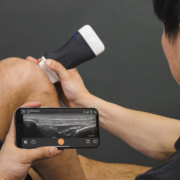
Diagnostic ultrasound uses sound waves to create real-time images of soft tissues. For certain shoulder problems, it can provide valuable information about the rotator cuff and other structures around the shoulder.

Ultrasound may help identify tendon abnormalities, including certain partial-thickness and full-thickness rotator cuff tears. It can also allow a trained clinician to observe tissues while the shoulder moves.

Another benefit is that ultrasound can be performed during your physical therapy evaluation when clinically appropriate, allowing the findings to be considered alongside your symptoms, strength, mobility, and movement patterns.

It is important to understand that ultrasound is not the right imaging test for every shoulder problem. MRI may be recommended for certain complex or deeper injuries. A qualified clinician can help determine whether diagnostic ultrasound or another form of imaging is appropriate.

Why Early Evaluation Matters

Ignoring shoulder pain can make it tempting to change how you move, avoid certain activities, or continue training despite worsening symptoms.

A comprehensive evaluation can help determine what may be contributing to your pain and identify the appropriate next steps.

At Wall 2 Wall Sports & Rehab, we don’t simply look at the location of your pain. We evaluate shoulder mobility, strength, stability, movement mechanics, and the demands you place on your body.

Treatment may include progressive strengthening, mobility exercises, manual therapy, movement retraining, and sport-specific rehabilitation.

Don’t Forget Your Overall Movement Health

Your shoulder is part of a larger movement system. Your neck, upper back, shoulder blade, core, hips, knees, and feet all contribute to how your body moves.

Maintaining healthy mobility, strength, balance, and coordination throughout your body can help you remain active and perform everyday activities with less limitation.

Just as healthy feet and ankles provide the foundation for your lower body, healthy shoulders are essential for upper-body movement, lifting, reaching, working, exercising, and participating in sports.

Taking care of these areas before small problems become major limitations is an important part of maintaining long-term physical health.

How Wall 2 Wall Sports & Rehab Can Help

Wall 2 Wall Sports & Rehab provides mobile physical therapy and diagnostic ultrasound throughout Glendale, Peoria, Surprise, Scottsdale, and the greater Phoenix area.

Our patient-focused approach combines a comprehensive physical therapy evaluation with advanced diagnostic tools when appropriate. Whether you’re an athlete dealing with a throwing injury or an active adult struggling with everyday shoulder pain, we can help identify the factors contributing to your symptoms and develop a plan based on your goals.

Don’t Guess About Your Shoulder Pain

If you are experiencing persistent shoulder pain, weakness, or difficulty with overhead activities, don’t assume you simply need to “work through it.”

Contact Wall 2 Wall Sports & Rehab today to schedule your comprehensive shoulder evaluation and find out whether diagnostic ultrasound may be appropriate for your injury.

Our goal is simple: help you understand your injury, move better, and get back to the activities you love.

Shoulder Impingement: What Is Really Causing Your Shoulder Pain?

Shoulder pain is one of the most common problems affecting athletes and active adults. You may notice pain when reaching overhead, lifting weights, throwing a ball, putting on a shirt, or even sleeping on your shoulder. One common diagnosis associated with these symptoms is shoulder impingement.

But what is really causing the pain?

Shoulder impingement is not always as simple as something being “pinched” inside the shoulder. Your shoulder is a complex joint that depends on mobility, strength, stability, and coordination. When one part of that system is not working properly, it can change how the shoulder moves and increase stress on the surrounding tissues.

What Is Shoulder Impingement?

The shoulder is designed to allow a large amount of movement. The head of the upper arm bone, called the humeral head, sits inside a shallow socket called the glenoid.

Several muscles and tendons, including the rotator cuff, help control the position of the shoulder as you move.

Shoulder impingement symptoms can develop when tissues around the shoulder become irritated during certain movements. This may include the rotator cuff tendons or the bursa, a small fluid-filled structure that helps reduce friction.

Common symptoms include:

  • Pain when reaching overhead
  • Pain when lifting or lowering your arm
  • Pain when reaching behind your back
  • Shoulder weakness
  • Pain while sleeping on the affected side
  • Pain during pressing, throwing, swimming, or lifting activities

What Really Causes Shoulder Impingement?

There is rarely one single cause of shoulder pain.

A sudden increase in training, repetitive overhead activity, weakness of the rotator cuff, limited shoulder mobility, or poor control of the shoulder blade can all contribute to symptoms.

Your shoulder blade, or scapula, plays an important role in shoulder movement. It must move and rotate properly as your arm moves overhead. If shoulder blade movement is limited or poorly controlled, other tissues may experience increased stress.

Your thoracic spine, ribs, and even your hips can also influence how your shoulder moves.

This is why simply treating the painful area may not address the entire problem.

Is Shoulder Impingement the Same as a Rotator Cuff Tear?

No.

Shoulder impingement symptoms can occur with rotator cuff tendinopathy, bursitis, partial tears, or other shoulder conditions. However, experiencing shoulder pain does not automatically mean you have a rotator cuff tear.

A thorough physical examination can help determine which structures may be contributing to your symptoms. When appropriate, diagnostic ultrasound imaging can provide additional information about the rotator cuff tendons, biceps tendon, and other superficial soft tissues.

Ultrasound can also allow a trained clinician to evaluate certain tissues dynamically while the shoulder moves.

Why Shoulder Health Matters

Your shoulders are involved in much more than sports. You use them to reach, lift, carry, push, pull, work, exercise, and perform everyday activities.

When shoulder pain changes the way you move, you may begin compensating with other parts of your body. Over time, this can affect your neck, upper back, and even your ability to perform normal daily activities.

Maintaining healthy shoulder mobility, strength, and stability can help you stay active and reduce limitations caused by pain or injury.

How Physical Therapy Can Help

At Wall 2 Wall Sports & Rehab, we take a comprehensive approach to shoulder pain. Rather than simply treating the location of your pain, we evaluate your shoulder mobility, strength, stability, movement patterns, and activity demands.

Treatment may include rotator cuff strengthening, shoulder blade exercises, mobility work, manual therapy, progressive loading, and sport-specific rehabilitation.

For appropriate patients, diagnostic musculoskeletal ultrasound can provide additional information about the tissues involved and help guide treatment.

As a mobile physical therapy practice serving Glendale, Peoria, Surprise, Scottsdale, and the greater Phoenix area, Wall 2 Wall Sports & Rehab brings personalized sports physical therapy directly to you.

Don’t Ignore Shoulder Pain

Shoulder pain does not have to become a long-term problem. If pain continues, interferes with your workouts, affects your sleep, or prevents you from participating in the activities you enjoy, getting a proper evaluation is an important first step.

Contact Wall 2 Wall Sports & Rehab today to schedule your mobile physical therapy evaluation. We can help identify the factors contributing to your shoulder pain and develop a personalized rehabilitation plan designed around your goals.

Move better. Get stronger. Stay active.

Five Sports Injuries Diagnostic Ultrasound Can Detect in Minutes

When an injury happens, one of the first questions athletes ask is, “What’s actually wrong?” Whether you’re a baseball player with shoulder pain, a runner dealing with Achilles discomfort, or a pickleball player experiencing elbow pain, getting the right diagnosis is the first step toward recovery.

At Wall 2 Wall Sports & Rehab, we use diagnostic musculoskeletal ultrasound to evaluate many sports injuries in real time. First, unlike X-rays, which only show bones, diagnostic ultrasound allows us to visualize muscles, tendons, ligaments, bursae, and other soft tissues while you move. This dynamic imaging helps us identify many common injuries quickly, allowing treatment to begin sooner.

Furthermore, here are five sports injuries that diagnostic ultrasound can often detect.

  1. Rotator Cuff Injuries

Shoulder pain is one of the most common complaints among baseball players, golfers, swimmers, CrossFit athletes, and anyone who performs overhead movements.

Diagnostic ultrasound can evaluate the rotator cuff tendons for signs of:

  • Tendinopathy
  • Partial-thickness tears
  • Full-thickness tears
  • Calcific tendinitis
  • Shoulder bursitis

Therefore, because the examination is performed while the shoulder is moving, we can often identify problems that may not be obvious during a static exam.

  1. Tennis Elbow and Golfer’s Elbow

Pain on the outside or inside of the elbow is often caused by overuse of the forearm tendons. These injuries are common in tennis, pickleball, golf, baseball, and strength training.

Ultrasound can identify:

  • Tendon degeneration
  • Partial tendon tears
  • Thickened tendons
  • Areas of abnormal blood flow associated with chronic tendon irritation

In fact, knowing exactly which tendon is involved helps guide a personalized rehabilitation program.

  1. Muscle Strains and Tears

A pulled hamstring, calf, quadriceps, or latissimus dorsi muscle can keep an athlete out of competition for weeks.

Diagnostic ultrasound helps determine:

  • Which muscle is injured
  • The location of the injury
  • The size of the tear
  • Whether bleeding or fluid is present

For this reason, this information helps estimate recovery time and allows rehabilitation to progress safely.

  1. Achilles and Patellar Tendon Injuries

Persistent pain in the Achilles tendon or just below the kneecap is common among runners, basketball players, volleyball athletes, and active adults.

Ultrasound can detect:

  • Tendinopathy
  • Partial tendon tears
  • Thickening of the tendon
  • Areas of degeneration
  • Increased blood flow associated with chronic tendon changes

Identifying these changes early can help prevent a more serious injury and improve long-term outcomes.

  1. Ligament Sprains

Ankle sprains, thumb injuries, wrist injuries, and certain knee ligament injuries can often be evaluated with diagnostic ultrasound.

By comparing the injured side with the healthy side and examining the ligament during movement, we can assess whether the ligament is stretched, partially torn, or intact. This information helps determine the most appropriate treatment plan and whether additional imaging or referral is needed.

Why Choose Diagnostic Ultrasound?

One of the greatest advantages of diagnostic ultrasound is that results are available immediately during your appointment. There is no radiation exposure, no enclosed scanner, and no waiting days or weeks to review images. Because the examination is performed alongside a comprehensive physical therapy evaluation, your imaging findings are combined with movement analysis to provide a more complete picture of your injury.

At Wall 2 Wall Sports & Rehab, we bring this advanced technology directly to you through our mobile concierge physical therapy service. We proudly serve athletes and active adults throughout Glendale, Peoria, Surprise, Scottsdale, Goodyear, and the greater Phoenix area, providing one-on-one care focused on helping you return to the activities you love.

Don’t Let Pain Keep You on the Sidelines

As a result, if you’ve been dealing with shoulder pain, elbow pain, knee pain, Achilles pain, or a recent muscle injury, don’t wait and hope it gets better on its own. An accurate diagnosis is the foundation of effective treatment.

Schedule a comprehensive evaluation with Wall 2 Wall Sports & Rehab today. Our combination of expert sports physical therapy, board-certified clinical expertise, and real-time diagnostic ultrasound can help identify the source of your pain and create a personalized recovery plan to get you back to performing at your best.